


New Delhi [India], June 7 (ANI): While global discussions on technology are dominated by the race for cutting-edge AI model development and advanced chip manufacturing, India's path to economic value creation lies in a different strategy: the massive, large-scale deployment of intelligence to solve systemic challenges.
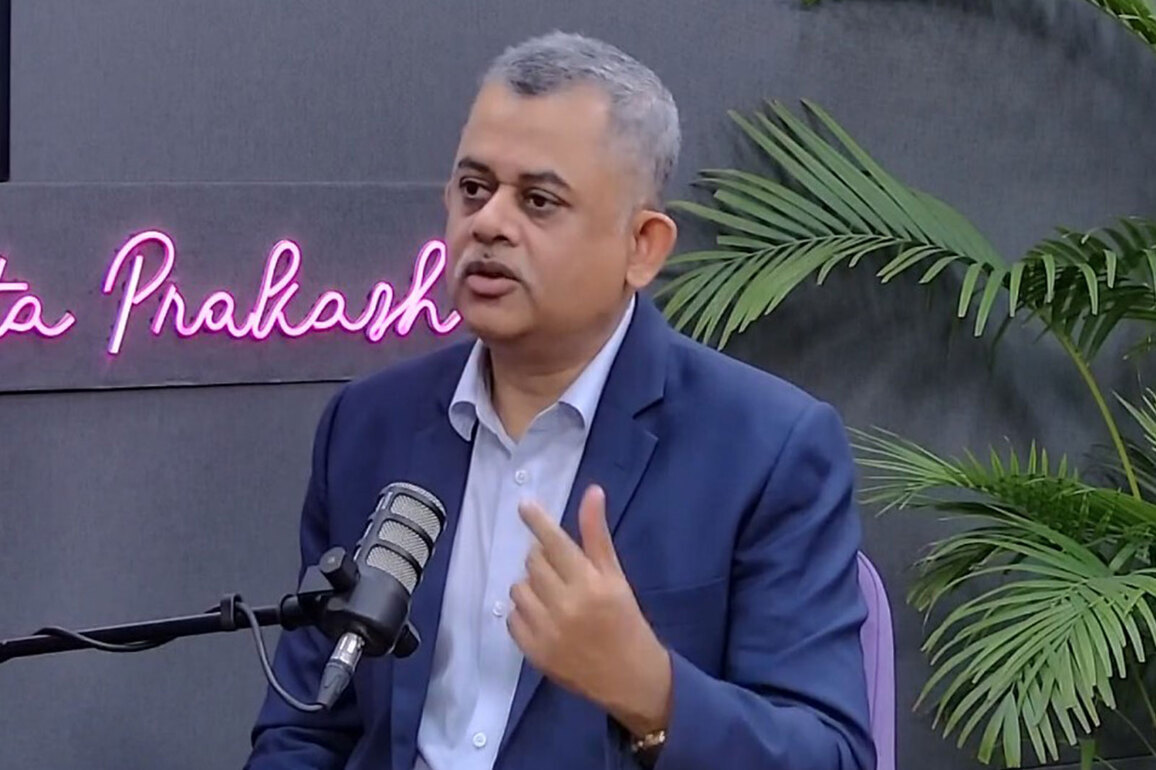
India may be behind the global leaders in artificial intelligence and semiconductor manufacturing, but the country has a significant opportunity to create value by deploying AI to solve real-world problems in sectors such as healthcare, education and banking, newly appointed World Bank Executive Director Neelkanth Mishra said.
Speaking to ANI, Mishra acknowledged that India is not yet a major player in the technologies currently driving global investor interest.
'We do have an issue is that the world today is all about artificial intelligence and semiconductors and DRAM and large language models. And so far we don't have anything,' he said.
Mishra attributed part of the gap to the limited availability of risk capital in India compared to countries such as the United States.
'At these levels of per capita wealth, there is not enough risk capital in the economy,' he said, adding that while some Indian AI firms struggle to raise a few hundred million dollars, leading global AI companies are attracting tens of billions of dollars in funding.
Despite India's current position, Mishra said the country's biggest opportunity lies in applying AI rather than competing immediately at the cutting edge of model development.
'I think we are going to do extremely well when the narrative shifts from generation of intelligence to deployment of intelligence,' he said.
'It is when this intelligence starts to get deployed into solving healthcare problems, education problems, banking penetration, that is where I think the true economic value will start coming out,' he added.
On semiconductors, Mishra said India has made substantial progress through the India Semiconductor Mission.
'I'm also very deeply involved with the India semiconductor mission. And I must say I'm very proud of what we've achieved in the last four years,' he said.
According to Mishra, India has moved from having virtually no semiconductor manufacturing presence to developing multiple packaging facilities and is expected to have its first wafer fabrication plant in the coming years.
'From having nothing on the ground, now we have so many plants doing semiconductor packaging,' he said.
'In another two years, we'll have the first fab doing wafer manufacturing,' he added.
However, Mishra noted that India remains significantly behind global leaders in advanced chip manufacturing.
'Unfortunately, it is at 28 or 40 nanometers. The world is at 1.8 nanometers. So we are like maybe eight, nine generations behind,' he said.
He said the upcoming Semicon 2.0 programme could help India attract manufacturers producing chips in the 7-12 nanometre range over the next decade.
'There is a Semicon 2.0 coming up. And there we can aspire to get manufacturers to do the 7 to 12 nanometers. By 2032, we can get there,' he said.
Mishra also called for greater investment in research and deep technology innovation, saying that while India's innovation ecosystem has improved, it remains far smaller than required.
'In the last three, four years, there's an explosion of engineers with high risk appetite who are going after really hard problems,' he said.
'But that ecosystem needs to be 100 times bigger,' Mishra added. (ANI)