

"The deeper issue is that both countries have conflicting visions for the future of the Middle East. The United States seeks to preserve a regional order built around its alliances, while Iran seeks recognition as a major regional power with legitimate security interests," Abdel Majid Suwailem, a Palestinian political analyst, told Xinhua.
BEIJING, June 12 (Xinhua) -- The United States and Iran traded new rounds of strikes in the past few days, raising fears of regional escalation amid a fragile ceasefire situation.
Experts suggest that the latest exchanges are largely intended to signal deterrence. While neither side seems interested in returning to a full-scale war, stalled negotiations on key issues suggest a period of sustained, low-intensity confrontation.
NEW ROUNDS OF STRIKES
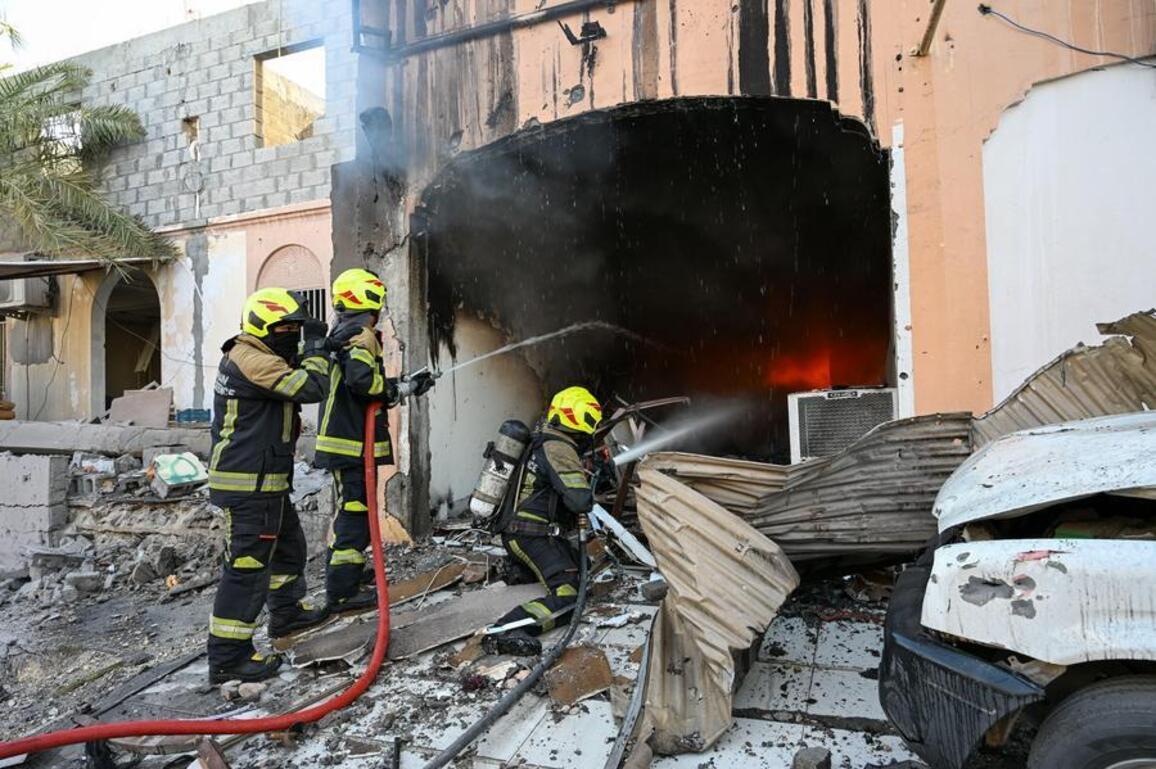
Washington and Tehran have exchanged several rounds of strikes this week. Iran's Islamic Revolution Guard Corps (IRGC) said on Thursday that it struck and destroyed 18 U.S. "important targets" in response to fresh U.S. attacks.
Bahrain and Kuwait said their air defense forces intercepted missiles and drones. Kuwait announced a temporary closure of its airspace as a precautionary measure.
Meanwhile, the U.S. Central Command said it had completed additional strikes against multiple Iranian targets in response to Iran's "unwarranted and continued aggression."
The escalation came after a U.S. Army Apache helicopter gunship crashed near the Strait of Hormuz on Monday.
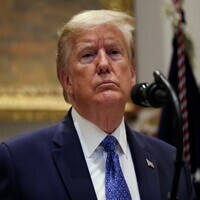
"I have just been informed ... that last night the Iranians shot down one of our highly sophisticated Apache helicopters while patrolling over the Strait of Hormuz," U.S. President Donald Trump said in a post on Truth Social.
"The United States must, of necessity, respond to this attack," he added.
U.S. media, citing a U.S. official, reported on Wednesday that it was unclear whether the Iranian drone had targeted the Apache intentionally or if it was an inadvertent takedown.
CONTROLLED ESCALATION
Analysts noted that the U.S. military's limited strikes on Iran once again underscored the Trump administration's dilemma in dealing with Tehran: feeling compelled to respond militarily, yet wary of becoming embroiled in a larger conflict.
"The Trump administration likely viewed military action as necessary to restore deterrence and demonstrate that attacks resulting in damage to American personnel or assets would not go unanswered," Ahmed Rafiq Awad, a Palestinian political analyst, told Xinhua.
"At the same time, Washington deliberately kept the operation limited because it understands the risks of a broader war with Iran. The United States wanted to send a strong political and military message without triggering a regional conflict that could prove costly and unpredictable," Awad said.
"The calculation appears to have been to punish and deter, while preserving space for future diplomacy and avoiding a prolonged military engagement," he said.
Researchers at the Jerusalem Center for Security and Foreign Affairs also noted that "Washington's current priority is stability, preventing an energy crisis and avoiding a conflict that could draw the United States into another Middle East war."
Analysts believe Iran is also reluctant to reopen a full-scale conflict. In previous rounds of hostilities, the Gulf country suffered significant losses to both its military capabilities and civilian infrastructure. It also continues to face a U.S. maritime blockade, placing its economy under immense strain.
"At this stage, Iran has little interest in a large-scale conflict because of the economic pressures it faces and the uncertainty such a war would create for its regional position. Its strategy appears to favor controlled escalation rather than open warfare," Awad said.
ELUSIVE PEACE DEAL
Despite the escalation, Trump has said a deal is close. U.S. media, citing a U.S. official, reported on Wednesday that "the new strikes are intended as a warning shot at Iran and that the U.S. believes they won't hinder negotiations to end the war."
However, little progress appears to have been made at the negotiating table, with many issues deadlocked, particularly those concerning the Strait of Hormuz and Iran's nuclear program.
Uncertainty remains over the Strait. Iran's main military command, Khatam al-Anbiya Central Headquarters, announced early Thursday that the Strait of Hormuz has been closed to all vessels. But U.S. Central Command said commercial vessels continue to transit the waterway.
As for the nuclear program, Ebrahim Azizi, head of the Iranian parliament's national security and foreign policy committee, just made it clear in late May that "We have no plans to take highly enriched uranium outside the country. We have no intention of transferring our enriched uranium to third countries, intermediaries, or anywhere else."
Analysts say the negotiations remain complicated, characterized by a deep lack of trust, with both sides skeptical of each other's intentions. As a result, both Washington and Tehran are likely to continue balancing pressure and deterrence with efforts to avoid a complete breakdown of relations.
"The deeper issue is that both countries have conflicting visions for the future of the Middle East. The United States seeks to preserve a regional order built around its alliances, while Iran seeks recognition as a major regional power with legitimate security interests," Abdel Majid Suwailem, a Palestinian political analyst, told Xinhua.
"Until this contradiction is addressed, technical agreements alone will have limited impact," Suwailem said.
Another factor that could potentially disrupt the negotiation process is the conflict between Israel and Lebanon, as shown over the past weekend.
"The Israel-Lebanon front is closely connected to the broader regional balance of power and therefore has a direct impact on U.S.-Iran relations. Any significant escalation could increase regional tensions and make diplomatic engagement more difficult," Awad said.